
- Home
- /
- Services
- /
- Plastic Injection Mold
- /
- Zinc Die Casting
Die Casting
Zinc Die Casting
The most precise and fastest die casting process. Zinc's low melting point allows hot-chamber casting at 300–350 units an hour, with walls as thin as 0.5 mm, tolerances of ±0.075 mm and a surface that is ready for plating, painting or powder coating straight from the die.
300–350 units / hr
0.5 mm minimum wall
±0.075 mm tolerance up to 25 mm
Why Aluminum
The alloy for parts that need strength without weight.
Aluminum die castings weigh about a third of the equivalent steel part while offering high strength, excellent heat dissipation, corrosion resistance and full recyclability. That is why they dominate LED light housings, motor and pump bodies, telecom enclosures and vehicle components.
Because aluminum melts at a higher temperature than zinc, it is cast on cold-chamber machines: metal is ladled from a holding furnace into the shot sleeve for each cycle. Our tooling is built in H13 hot-work steel to handle that heat over 100,000+ cycles.
Alloys, Finishing & Applications
Zamak Alloys and Plating-Ready Surfaces
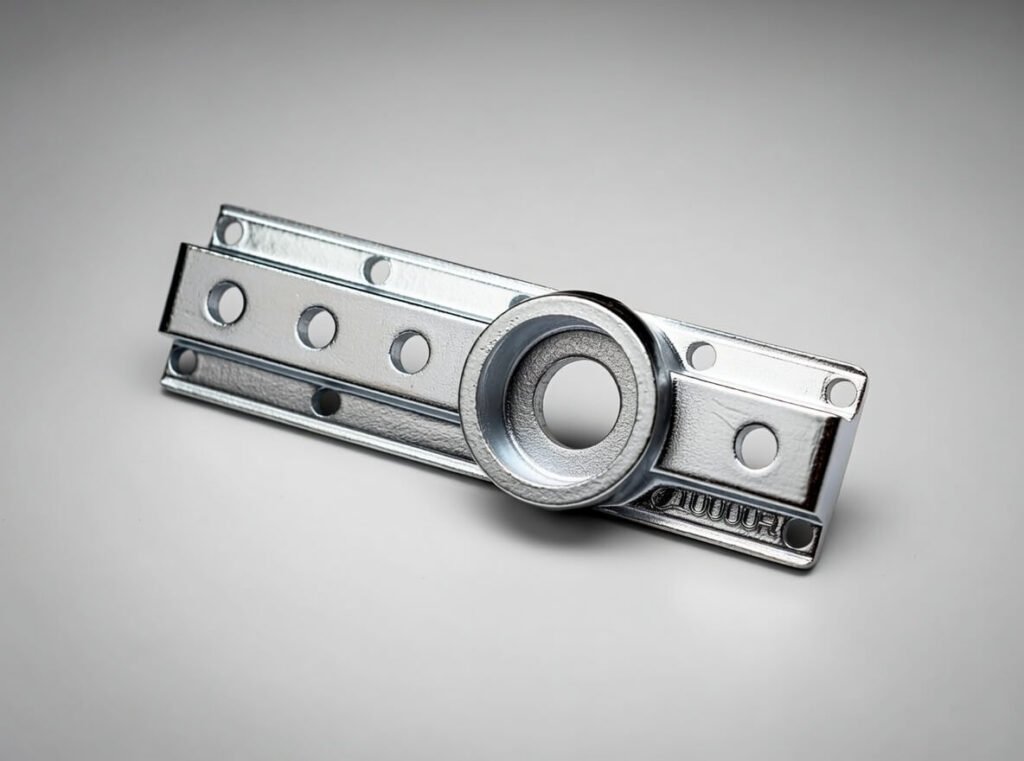
- Zamak 3 — the standard alloy: excellent castability, dimensional stability and plating response
- Zamak 5 — higher strength and hardness for load-bearing hardware and gears
- ZA-8 — the strongest hot-chamber zinc alloy for bearings and structural parts
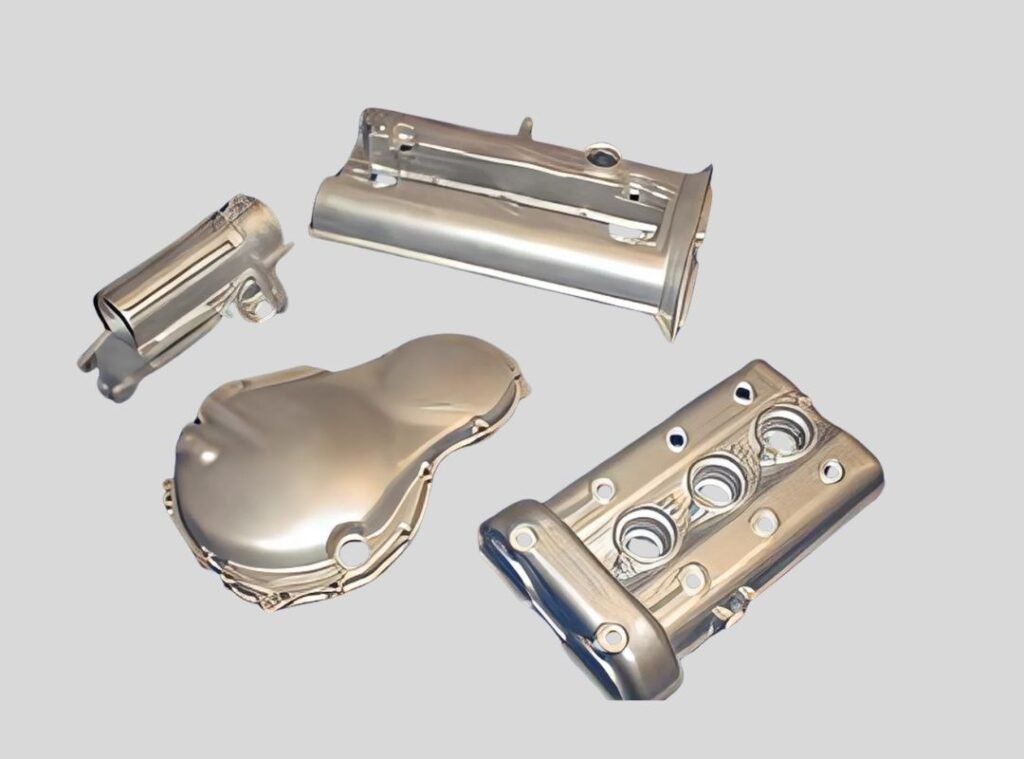
Zinc's smooth as-cast surface (to 1250 micro-mm R.M.S.) takes chrome, nickel, brass and gold plating, powder coating and painting with minimal preparation. Typical parts include telecommunications and electronic connectors, locks and handles, medical and commercial equipment hardware, lighting fittings and decorative motor vehicle trim.
The Process
Hot-Chamber High-Pressure Die Casting
- Gooseneck fills — the injection system sits in a pot of molten zinc; on each cycle the gooseneck fills automatically with metal.
- Shot — a plunger drives the metal through the nozzle into the die in a fraction of a second, filling walls as thin as 0.5 mm.
- Solidification — zinc freezes quickly under pressure, so cycles are short and dimensions are stable.
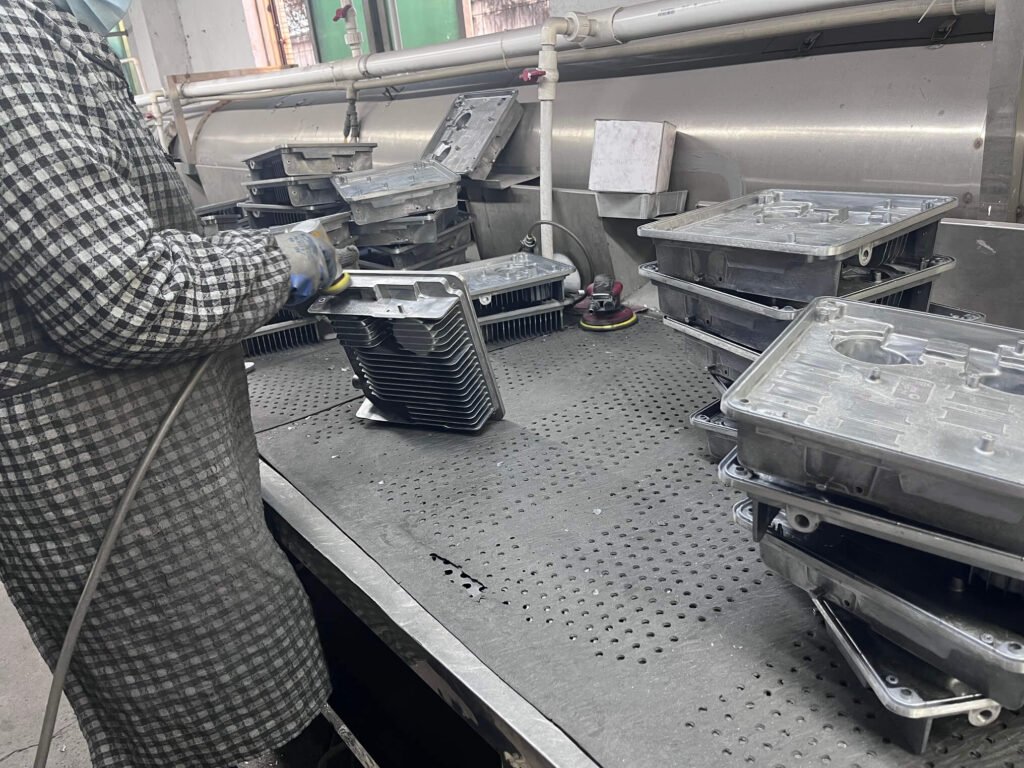
- Ejection and trimming — castings are ejected, trimmed and de-gated, then vibratory finished or polished ready for plating.
How We Deliver It
Five steps from 3D file to finished castings.
01
DFM & Quotation
Alloy, wall thickness, draft and finish reviewed; quote in 24 hours.
02
Die Tooling
Multi-cavity zinc die designed, simulated and built in-house.
03
Sample Castings
Trial parts measured on CMM for your approval.
04
Hot-Chamber Production
High-speed casting, trimming and vibratory finishing.
05
Plating & Delivery
Plating or coating, final inspection, packing and shipping.