
- Home
- /
- Services
- /
- Plastic Injection Mold
- /
- Insert Molding
Plastic Injection Molding
Insert Molding
Mold the metal in, not on. Insert molding places threaded inserts, pins, terminals or magnets into the mold cavity before the shot, so plastic forms around them and the part leaves the press already assembled — stronger, lighter and with no secondary operation.
1 shot replaces assembly
±0.05 mm insert position
Vertical & horizontal presses
What It Is
Stronger parts with fewer operations.
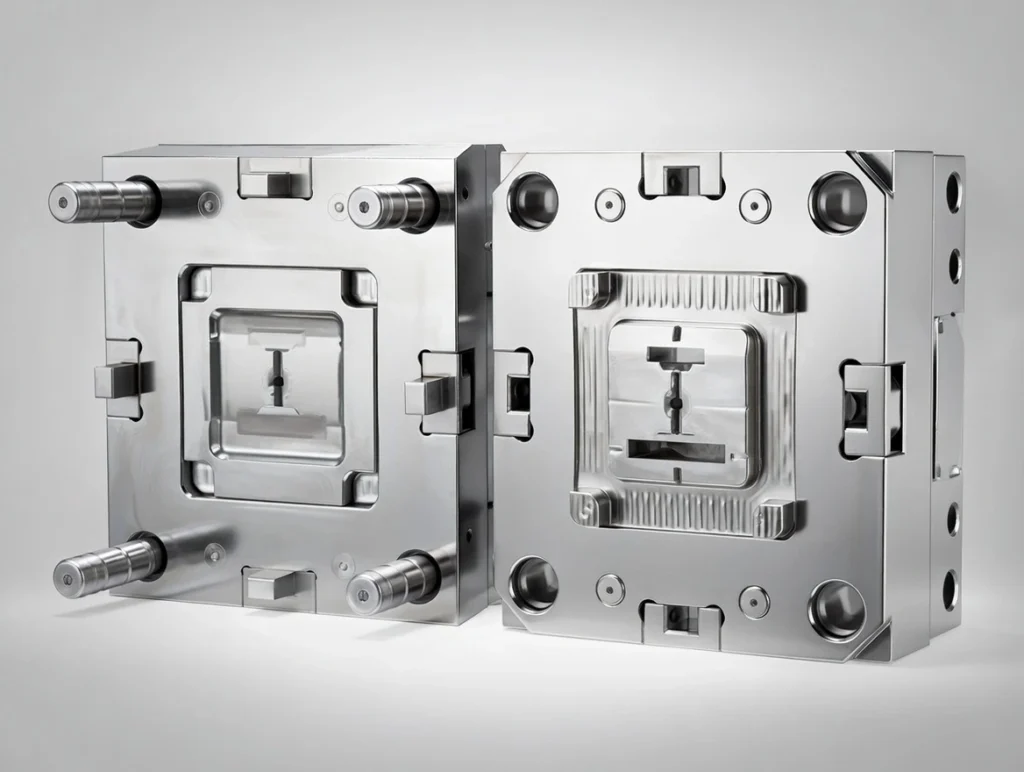
Insert molding is an injection molding process in which a pre-formed component — usually metal — is placed into the mold and plastic is injected around it. As the resin cools it shrinks onto the insert and locks it in place. No press-fitting, no ultrasonic staking, no adhesive, no loose parts in a bag.
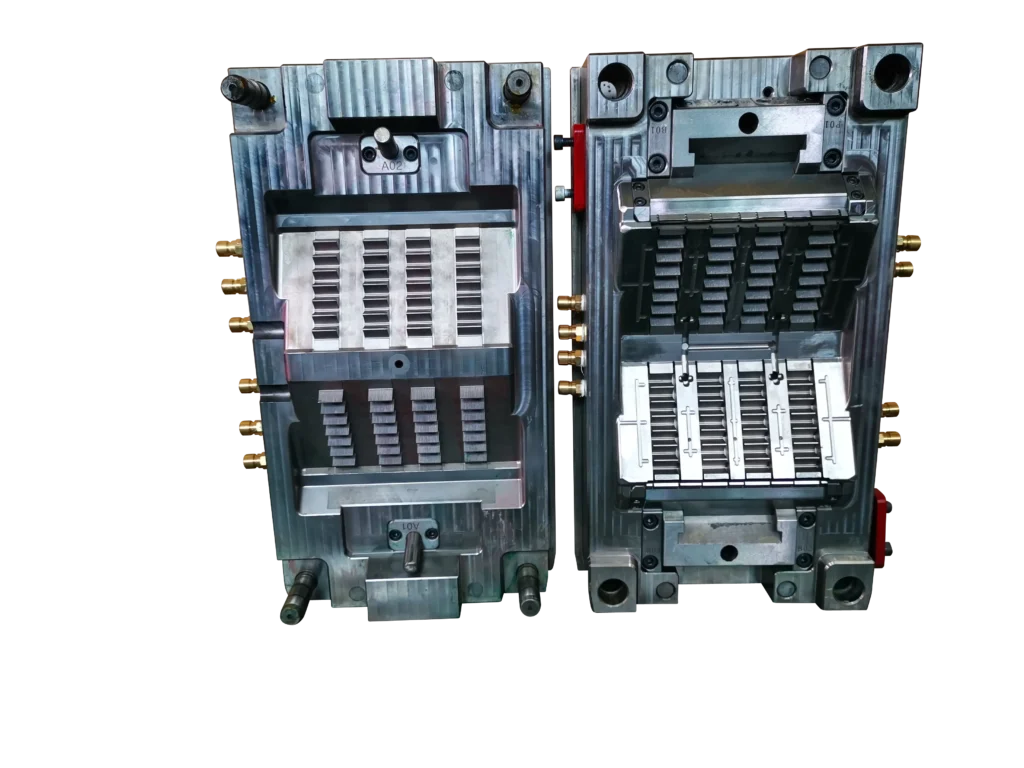
We design the insert mold and run production in the same facility: the tool locates every insert positively, seals off against flash on threads and contacts, and survives millions of loading cycles on our vertical rotary-table or horizontal presses.
The Process
How Insert Molding Works
- Mold closes and seals — the cavity shuts off precisely around the insert so no plastic reaches threads or contact faces.
- Injection — molten resin flows around the insert; knurls, grooves and undercuts give the plastic a mechanical grip.
- Cooling and ejection — the resin shrinks onto the insert and the finished, assembled part is ejected.
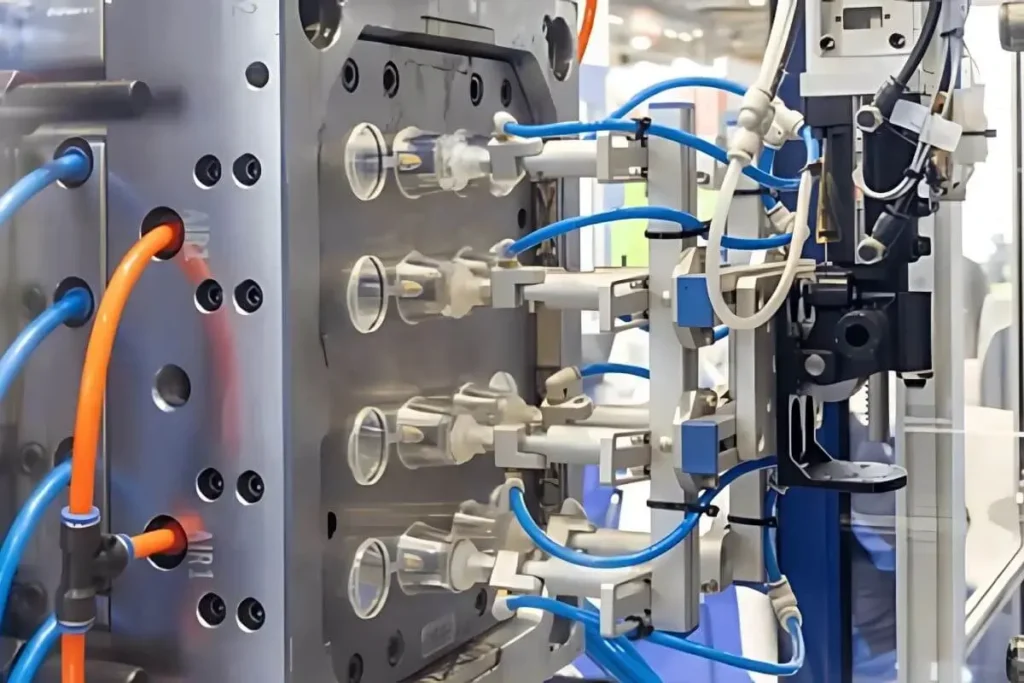
- Insert loading — inserts are placed on locating pins in the core, by hand on a vertical press with a rotary table or by robot on a horizontal press.
Inserts & Design Rules
What We Mold Around — and How We Design for It
Our DFM report checks every insert part for grip features on the insert, a minimum 1.0–1.5 mm plastic wall around it, positive location with 0.02–0.05 mm clearance and a preheat spec to prevent cracking from shrinkage mismatch.
- Threaded brass inserts for screw bosses in housings and enclosures
- Stamped terminals and lead frames for connectors, sensors and switches
- Steel pins, shafts and bushings for gears, hinges and rotating parts
- Magnets, PCBs and glass encapsulated in PA, PBT or PC
Our DFM report checks every insert part for grip features on the insert, a minimum 1.0–1.5 mm plastic wall around it, positive location with 0.02–0.05 mm clearance and a preheat spec to prevent cracking from shrinkage mismatch.
How It Works
Five steps from 3D file to shipped parts.
01
Send Your Data
3D file, resin, quantity and finish requirements.
02
DFM & Quotation
Manufacturability review and competitive quote within 24 hours.
03
Mold & T1 Samples
Tool built in our shop, samples measured on CMM for your approval.
04
Production
Parts molded 24 hours a day with batch QC records.
05
Inspection & Delivery
Final inspection, packing and global shipping to your door.