
- Home
- /
- Services
- /
- Plastic Injection Mold
- /
- Aluminum Die Casting
Die Casting
Aluminum Die Casting
Light, strong and thermally conductive parts, cast at volume. Molten aluminum alloy heated to around 1,400 °F is forced into a hardened steel die under high pressure, cooled and ejected — then machined, powder coated, anodized or polished into a finished component.
75–150 units / hr
0.8 mm minimum wall
Up to 30 kg casting weight
Why Aluminum
The alloy for parts that need strength without weight.
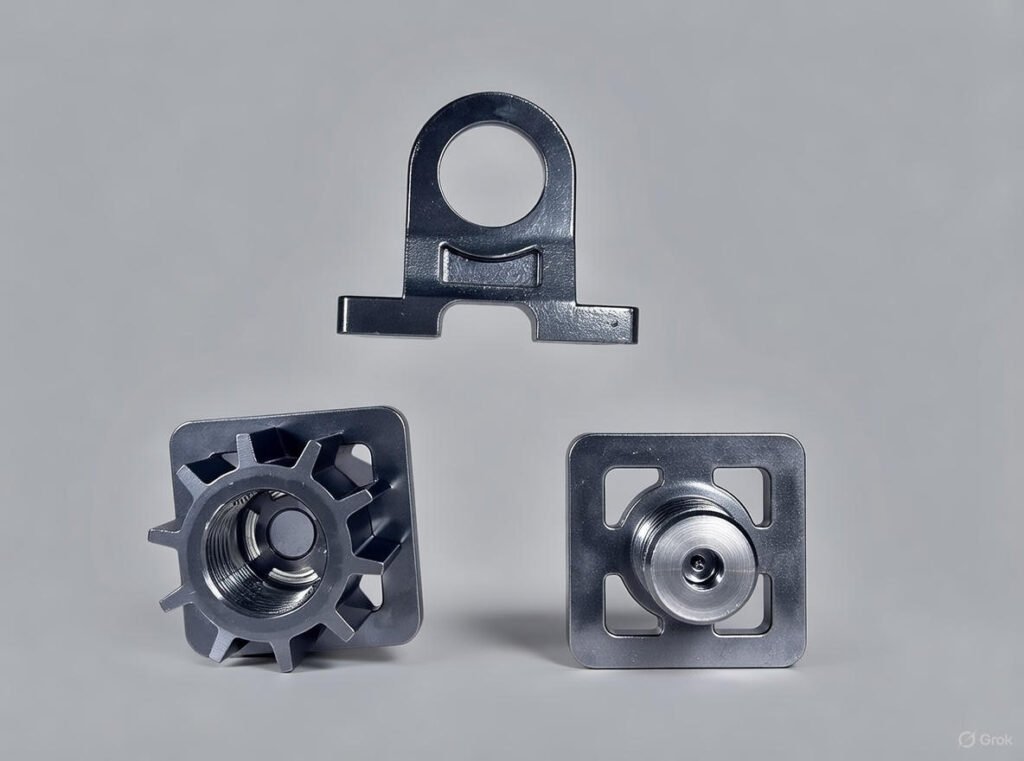
Aluminum die castings weigh about a third of the equivalent steel part while offering high strength, excellent heat dissipation, corrosion resistance and full recyclability. That is why they dominate LED light housings, motor and pump bodies, telecom enclosures and vehicle components.
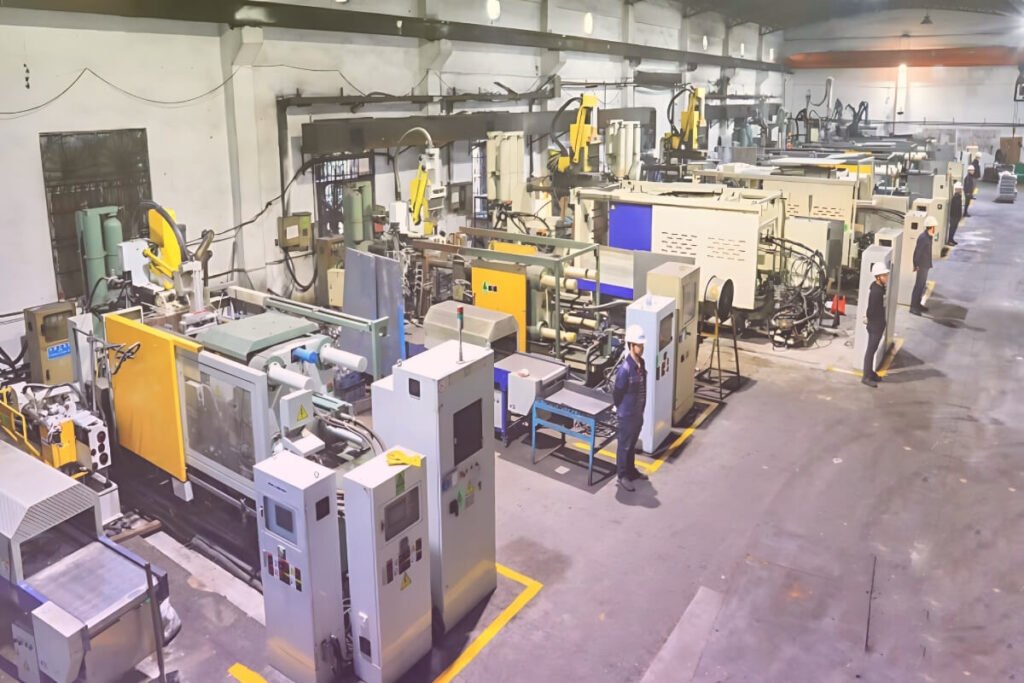
Because aluminum melts at a higher temperature than zinc, it is cast on cold-chamber machines: metal is ladled from a holding furnace into the shot sleeve for each cycle. Our tooling is built in H13 hot-work steel to handle that heat over 100,000+ cycles.
The Process
Cold-Chamber High-Pressure Die Casting
- Melting — aluminum alloy is melted and held at temperature in a furnace beside the casting machine.
- Shot — a measured ladle of metal is poured into the shot sleeve and a plunger forces it into the die at high pressure.
- Solidification — pressure is held while the metal cools in the water-cooled die, giving a dense, dimensionally stable part.
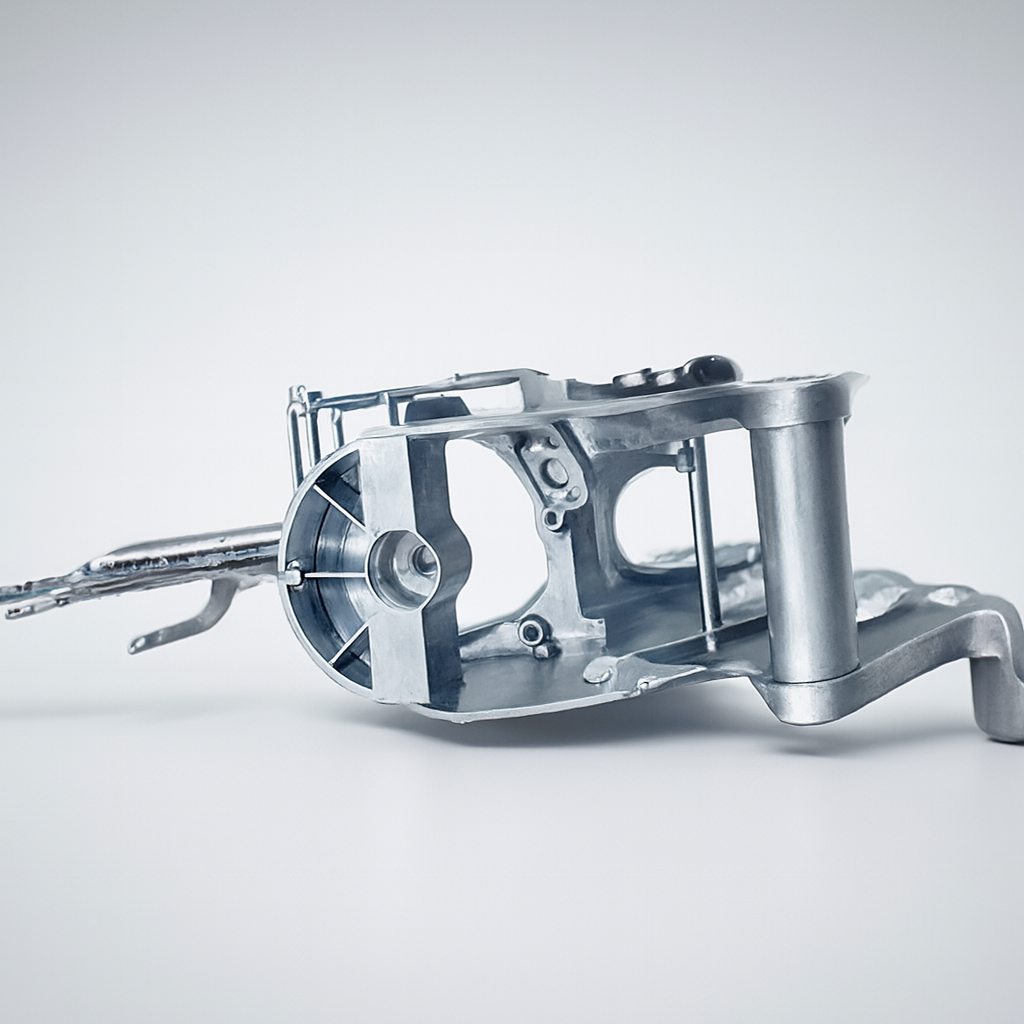
- Ejection and trimming — the die opens, the casting is ejected and the runner, overflows and flash are trimmed in a press.
Manual process monitoring paired with automation means flaws are caught and corrected early, so every lot leaves with the same finish and integrity.
Alloys, Finishing & Applications
Right Alloy, Right Finish for the Job
- ADC12 / A383 — the general-purpose choice: excellent castability, good strength, thin walls
- A380 — higher strength and pressure tightness for pump, compressor and hydraulic parts
- A360 — better corrosion resistance and ductility for outdoor and marine housing
After casting we CNC machine critical faces and threads, then finish by powder coating, painting, shot blasting, chromate conversion, anodizing or polishing. Typical applications include LED light housings, telecommunications enclosures, air compressor and industrial pump parts, commercial equipment and motor vehicle components.
How We Deliver It
Five steps from 3D file to finished castings.
01
DFM & Quotation
Alloy, draft, wall thickness and machining reviewed; quote in 24 hours.
02
Die Tooling
H13 die designed, simulated and built in our shop.
03
Machining & Heat Treatment
Trial parts measured on CMM and checked for porosity.
04
Casting & Machining
Cold-chamber production, trimming and CNC finishing.
05
Finishing & Delivery
Surface treatment, inspection, packing and global shipping.